


Monday, April 28, 2014
Senate/House jointly shortchange public notice on conference committees today
by Larry Geller
I received a tip from an astute Disappeared News reader that once again, public be damned, the Legislature is just going to bend or break its own rules and leave us in the dust. Hat tip to the reader for the alert.
Four bills, HB1745, HB1796, HB2257, and HB2626 are scheduled for a 4 p.m. conference committee, but notice was apparently given at about 1 p.m.
The pdf of the notice has an incorrect internal date stamp. The document is interesting in that it sets out the rules for conduct of the conference committees, and is signed by both the Senate President Donna Mercado Kim and the Speaker of the House Joseph M. Souki and dated by them 4/28/2014 (today).
Now, the real work of the conference committees actually take place behind closed doors. Conference committee time is when democracy ceases to exist at our state legislature. But at least they could give the public the required notice in case people want to show their faces and grunt their opinions when the results are announced for each bill.
The first three bills are education bills and the last is a manufacturing tax credit that for some reason we taxpayers could be forced to support. Any tax credit means the funds will have to be made up someplace. I am not sure the public should be given short notice on a bill that will impact their wallet and benefit private interests.


Another high-tech #fail illustrates the need for better advice
by Larry Geller
I’ve advocated for a “chief technology officer (CTO)” for the state several times, because I believe we are technologically deprived here in middle of the Pacific Ocean. Whether it’s knowing how to design efficient street and sports field lighting, fill potholes or how to keep white lines on crosswalks, or (in this case) evaluating the validity of local tech upstarts, it would be great to have an expert opinion available. Particularly when we can’t do something that others do readily, we could benefit from some good advice.
In Sopogy's Demise is a Huge Victory for Honest Engineering and the Taxpayer (Hawaii Reporter, 4/28/2014), Panos Prevedouros reviews the spectacular rise and then fall of Sopogy, one of the media’s high-tech darlings. Snip:
Sopogy was told by numerous engineers that their Kona projections were absurd and violated the second law of thermodynamics. Sopogy proceeded anyway with their original plan.
…
The most factual evidence suggests that throughout its existence, Sopogy generated 0.1 MW! This is roughly equal to 50 modest solar installations on residential rooftops. It took $20 million (yes million) of Hawaii technology tax credits to accomplish so little.
Now, I have some experience in criticizing technology projects incorrectly. In my younger years, just before 56K dialup modems came to market, I proved conclusively by Shannon’s Law that such data speeds were not possible. I was wrong… big time. So I can’t say that an analysis based on the second law of thermodynamics is any more credible than the claims of the developers that it works.
But that’s my point—there should be some way to get unbiased technology reviews when taxpayer money is involved.
Sopogy’s failure followed the demise of Hoku Scientific, another media high-tech alternative energy darling.
You’d think that in a place with all this sunshine, solar energy ventures might just succeed… and of course, you’d be wrong. What’s booming is the installation of rooftop solar systems, basically a contractor’s business.
That’s not to say that Hawaii can’t do high-tech. It would be strange if there were none, but there are plenty of barriers to any island isolated from markets, vendors, and technology resources of all kinds from getting really good at it.
Venture capitalists know that one day the bean counters will come knocking on the startup CEO’s door and suggest that the time for surfing is past, best to pack up and move to Silicon Valley and make some money. Investors don’t care if a venture succeeds in Hawaii, just that it succeeds. So with a couple of exceptions, the exodus of tech parallels the exodus of top engineering graduates, for example—the prospects for success lie elsewhere.
Now, having said that, the reason a CTO would be a benefit is that there would be second opinion available as well as a valuable resource. What will work in Hawaii? What technologies should we embrace?
Should the state invest tax credits in a proposal or not? What are the risks?
Should we change the mix of asphalt we are using to pave streets and highways?
Are there better ways to handle storm water than to build sewer systems at public expense?
Why do city parks waste electricity by installing old-fashioned lighting fixtures that light up the sky instead of the sports field?
Do we really have to install light poles in middle of the sidewalks along Ala Moana Boulevard?
What should legislators expect as a fair price for electric generation in the state, and what must we do to achieve it?
Those Kakaako condos will be filled, if they are built, but not by our people…
Example of tornado warning—this is what many people experience on the Mainland
This is a current tornado warning, still posted as of noon, HST today.
272
WFUS54 KJAN 282058
TORJAN
MSC007-099-159-282145-
/O.NEW.KJAN.TO.W.0039.140428T2058Z-140428T2145Z/
BULLETIN - EAS ACTIVATION REQUESTED
TORNADO WARNING
NATIONAL WEATHER SERVICE JACKSON MS
358 PM CDT MON APR 28 2014
THE NATIONAL WEATHER SERVICE IN JACKSON HAS ISSUED A
* TORNADO WARNING FOR...
EAST CENTRAL ATTALA COUNTY IN CENTRAL MISSISSIPPI...
NORTHWESTERN NESHOBA COUNTY IN EAST CENTRAL MISSISSIPPI...
WINSTON COUNTY IN EAST CENTRAL MISSISSIPPI...
* UNTIL 445 PM CDT
* AT 359 PM CDT...A CONFIRMED LARGE AND EXTREMELY DANGEROUS TORNADO
WAS LOCATED NEAR ZAMA...AND MOVING NORTHEAST AT 45 MPH.
THIS IS A PARTICULARLY DANGEROUS SITUATION.
HAZARD...DAMAGING TORNADO.
SOURCE...RADAR CONFIRMED TORNADO.
IMPACT...YOU ARE IN A LIFE THREATENING SITUATION. FLYING DEBRIS
WILL BE DEADLY TO THOSE CAUGHT WITHOUT SHELTER. MOBILE
HOMES WILL BE DESTROYED. CONSIDERABLE DAMAGE TO HOMES...
BUSINESSES AND VEHICLES IS LIKELY AND COMPLETE DESTRUCTION
POSSIBLE.
* THE TORNADO WILL BE NEAR...
STALLO AROUND 415 PM CDT.
CENTER RIDGE AND LOUISVILLE AROUND 425 PM CDT.
VERNON AROUND 430 PM CDT.
MILLCREEK AROUND 435 PM CDT.
OTHER LOCATIONS IN THE WARNING INCLUDE NOXAPATER.
PRECAUTIONARY/PREPAREDNESS ACTIONS...
TO REPEAT...A LARGE...EXTREMELY DANGEROUS AND POTENTIALLY DEADLY
TORNADO IS ON THE GROUND. TO PROTECT YOUR LIFE...TAKE COVER NOW. MOVE
TO AN INTERIOR ROOM ON THE LOWEST FLOOR OF A STURDY BUILDING. AVOID
WINDOWS. IF IN A MOBILE HOME...A VEHICLE OR OUTDOORS...MOVE TO THE
CLOSEST SUBSTANTIAL SHELTER AND PROTECT YOURSELF FROM FLYING DEBRIS.
LAT...LON 3283 8932 3293 8932 3293 8934 3311 8936
3312 8932 3311 8931 3311 8922 3316 8921
3321 8908 3328 8882 3296 8881
TIME...MOT...LOC 2059Z 247DEG 37KT 3293 8933
TORNADO...OBSERVED
TORNADO DAMAGE THREAT...CONSIDERABLE
HAIL...1.75IN
by Larry Geller
Looking through tweets or breaking news, I do think, often several times a day, “lucky we live Hawaii.”

Climate change means more extreme weather for much of the USA and the rest of the world, and increased drought in Hawaii. Also, the number of trade wind days are predicted to be fewer.
Drought is not good, of course. Still, it’s not tornados or hail. Not yet, anyway. We arguably have a very much better climate than many people.
How long will it be before Mainlanders think of coming here to live? That is, those who have not already thought of it?
Why would they not come? Tomorrow’s newspapers will likely have photos of the destruction wreaked by tornados currently sweeping Mississippi.
Sooner or later, folks will be selling the farm and flocking over here where cars don’t have to be shoveled out of snow drifts and where the rivers (generally speaking) don’t rise much. Knock wood.
My point: those expensive condos planned for Honolulu are not for us, they’re for them. At the same time, those condos threaten our quality of life and possibly the tourist economy. They will lead to increased traffic (which also impacts quality of life and tourism).
A condo is a machine for turning land into money. HCDA is the facilitator. They make money for developers. What have they done for us lately?
How does turning Kakaako into Hong Kong benefit any of us?
Still: #luckywelivehawaii.
But it’s up to us to keep it that way.
Wednesday, April 23, 2014
Rep. Calvin Say, former speaker, in the hot seat now
by Larry Geller
Check out Appeals Court: Calvin Say Must Prove He Lives in the District He Represents (Civil Beat, 4/23/2014)—and I understand that KITV did something as well.
Although there have been prior challenges to Say’s residency, this one has the possibility to succeed. For one thing, the order has just the right amount of Latin:
A writ of quo warranto inquires into the authority by which a State official claims her or his office HRS § 659-1 (1993).
I’m just kidding. But that Latin phrase explains what Say will have to defend against at trial in the lower court—the Intermediate Court of Appeals has bounced the case back down to the trial court, where it is likely, according to the article, to be heard before the next election.
Say will find that attorney Lance Collins is a formidable opponent. Collins has defended Hawaii’s Sunshine Law in a recent case, and before that, he argued and won Babson v. Cronin, which determined that the State of Hawaii’s use of electronic voting machines was not adopted through lawful rulemaking. Also at issue in that case was the use of electronic transmission of voting results, which could subject the election process to so-called “man in the middle” attacks in which the numbers could have been changed. Collins takes defending good government seriously. Good for all of us.
Collins doesn’t mess around. It would be interesting to be in the courtroom to watch how the trial goes. Regardless of the outcome, there could be several similar cases filed in state court as a result of today’s decision.
Civil Beat’s article is a clear explanation, and includes a copy of the ICA opinion.
How Honolulu is killing the goose that brings us golden eggs
“
There seems little sense of urgency in Honolulu Hale to match the deplorable conditions on the streets in Waikiki. …
HOMELESS PEOPLE have been reported as defecating and urinating in streets and hotel gardens, stealing towels and other supplies, panhandling and blocking access to parks and beaches. The slowdown in tourism traffic largely has been attributed to rising airfare and hotel costs making Honolulu less competitive among destinations, but anecdotal reports about homelessness in Waikiki — and the word has gotten around, via the Web — surely isn't helping.
…
Whatever the range of tools Honolulu can assemble, it had better include one more element that's been in short supply: political will to tackle this problem.—Star-Advertiser p. A11, 4/23/2014)
”
by Larry Geller
It can be done—except in Honolulu??
“
With the help of national organizations like the 100,000 Homes Campaign and the Rapid Results Institute, Veterans NOW set out to get 225 homeless veterans, including 80 who were chronically homeless, into housing in just 100 days. The 100-day metric is a clever approach in a campaign like this because, as [Adam] Rocap [, chief program officer at a local homeless services provider] explained, it’s “long enough to do planning but short enough to be motivated and see measurable results.”
On Thursday, Veterans NOW released its initial results. Despite setting such a lofty goal, in the 100 days between August 9 and November 30, it was able to get 207 veterans into homes, including 96 chronically homeless vets.
”
So what is wrong with us here in Honolulu? From the pull-quote above, you might assume it’s lack of motivation.
You’d be right.
(read the rest of this short article here)
It’s one thing to rant on a blog that Honolulu’s continued neglect of its homelessness problem can negatively affect tourism, the driver of our economy—and another to see it in print in the commercial press.
Today’s Star-Advertiser editorial is spot on. Neglect of programs to assist the homeless may already be negatively impacting tourism.
Now that’s fine, but it’s a shame that we don’t also see an outpouring of compassion (also called “aloha”) in the “Aloha State” for those forced to live on the streets or beaches.
The “problem” has gone on long enough, the editorial hints. The effects are being felt.
Hey, read my blog.
Honolulu Hale (our City Hall, for out-of-state readers) has public toilets. Our mayor and city councilpeople use them all the time. The rest of us have to be sure to pee before leaving home, because there’s no place to go if you’re downtown unless you can make it to (for example) the State Capitol. When Macy’s closed on Fort Street Mall, it created a public toilet crises for both residents and visitors.
Perhaps city councilpeople just don’t understand that by refusing to confront Honolulu’s toiletlessness problem, they help to kill the golden goose that is tourism in Hawaii.

How many letters to the editor will it take to convince our leaders that they need to put the pedal to the metal and put in place measureable solutions?
I would love to read in the paper that 300 people have been housed or that 10 public toilets have been installed downtown.
The Star-Advertiser editors are on the money (or lack thereof…) by observing today:
… the Council seems hesitant to embark on a full-scale launch of a homelessness initiative patterned after successful "Housing First" programs elsewhere. Its response to the administration's request for $3 million was to cut back funds needed to get the program going.
There seems little sense of urgency in Honolulu Hale to match the deplorable conditions on the streets in Waikiki.
As the boxed quote above right illustrates, one can move faster. Certainly, it’s hard to imagine moving more slowly than our state and city governments. It should be noted that many states and municipalities began their “end homelessness in ten years” program about a decade ago. We have yet to get started. But it seems we’re good at complaining.
On the state level, while not as reluctant to spend as our city “fathers,” Housing First and other initiatives remain in the future. At a recent task force meeting a Mainland speaker provided valuable information, but the mental health services described to assist some people in successfully remaining in their apartments are still but a dream. Contracts have not gone out to bid that I am aware of.
So we can look forward to more letters to the editors and editorials. The news media could do everyone a service by halting their dehumanization of those forced to live on the sidewalks. Here’s a tweet in reaction to a KHON news story:

One day, though, things could snap…
The faddishness of the Japanese consumer market
To the extent that tourism still depends to a large extent on the Japanese and Asian markets, it is vulnerable to the fads and fickleness endemic in Japanese consumer culture.
There is plenty out there for the Googling on psycho-cultural perspectives on Japanese consumer preferences. Of course, television and print advertising will continue to influence consumer choices, including pushing travellers to vacation or get married in Hawaii, but there are other influences at work that are perhaps not appreciated on this side of the pond. The Hawaii ads support an ageing tourist destination. What exactly is new here, anyway? Mostly some new restaurants, but Hanauma Bay and so forth remain the same. So Hawaii, as a tourist destination, could be vulnerable to any new fad. Negative press or Internet reports would increase that vulnerability.
While a major Japanese newspaper (and the Japanese remain voracious readers) may choose not to expose Honolulu’s traffic, construction and homelessness problems, the same can’t be said for the shukanshi (週刊誌), or weekly magazines and tabloids. The newspapers may have the good sense to protect their outbound tourism ad revenue, but “good sense” cannot be used in a sentence referring to many of the shukanshi. These publications thrive on sensationalism and scandal.
Just imagine a story documenting someone’s bad trip to Honolulu—how they had to ask a person living in a tent on the sidewalk for directions to the nearest public toilet, or report how they missed their flight to the airport due to miserable traffic on the H-1. How they couldn’t see the moon between Waikiki skyscrapers. This category of media thrives on excess and would bring out the worst, if that’s what they had a mind to do. It doesn’t even matter terribly if the stories are true.
Should one such story be picked up by other publications, we in Honolulu could feel the impact. The fickleness of the Japanese consumer could help an unscrupulous promoter to shift tourist interest from Hawaii to some “magical” lake in China, for example. What better way to promote the lake for weddings than to knock Hawaii?
I am not making this up. There are articles and letters in Japan and Asia already. Example:
米華字紙・僑報(電子版)が地元紙の報道として伝えたところによると、ホノルルのチャイナタウンには公衆トイレがなく、商工会会長の郭氏によると、「以前からこの一帯は不潔で臭いもひどい」状態。「それもこれも公衆トイレがないせいだ。…
[The Google translation, such as it is (sorry)]: From what the U.S. flower-shaped paper, 僑報 (electronic version) said as news of the local paper, there is no public toilets in the Chinatown of Honolulu, according to Mr. Guo of the Chamber of Commerce president, this area is also smell a filthy from "In the past terrible" state. Mr. Guo has said, "it is also to blame there is no public toilets as well. Hawaii such as the success of the APEC, we have a lot of great things. Yet, it is laughable toilet problem of Chinatown even Nantes can not be resolved" he said.
Drive for public toilet installation has been carried out for several years in the Chinatown of Honolulu, but does not progress at all."The trouble toilet is close to take a year. Owe the toilet of the alternating reluctantly now. Several hundred spectators had come to borrow a day there," said 80-year-old woman who had come to play appeal.[xinhua.jp, A public toilet in Chinatown in Honolulu? 「急にもよおしても駆け込むところがない」と不満の声続出―ハワイ After another voice of discontent "where you rush even if events suddenly there is no", 1/17/2014]
Note that Xinhua is a Chinese news agency, posting this article in Japanese for a Japanese audience. All that’s missing is a companion article on how pleasant it would be to visit that lake in China instead of suffering indignities in Honolulu.
I’m not saying such a thing will happen, but it certainly could, and our government’s failure to keep Honolulu in good condition would feed into that unfortunate scenario.
Call it insurance. Economic insurance. Probably it has these aspects to it:
- begin to actually implement programs to benefit those living outdoors instead of just talking about it or confiscating their property in expensive raids
- reign in overdevelopment—politicians already have the developers’ campaign contributions in the bank, so maybe it’s ok to do what’s right for a change
- for goodness sake—put in plenty of public toilets and break with tradition by keeping them clean
- the hotel sector has been subsidized long enough—don’t enlist their help, demand their help in funding and implementing programs that would benefit the homeless and residents as well
- etc., you can think of things we badly need to do as well as I can. Most of them are obvious, and obviously neglected here.
If we need to replace some city councilpeople or state legislators who believe that cruel, negative and punishing tactics are the way to deal with the housing/homeless situation, we can do that too.
Or we can wait, and the hotel industry will react as soon as it realizes what it needs to do. But that won’t put food on our table or help pay our outrageous electric bills.
Instead of building mental health services, Hawaii has slashed them
The services mentioned by the invited speaker included ACT (Assertive Community Treatment) services, which are complex to initiate. Hawaii slashed its ACT services, probably resulting in an increase in homelessness and deaths (see: Article misses the point—state cutbacks caused deaths and increase in those on streets with mental illness, 9/1/2013). One can confidently point the finger at the state government for significantly worsening the homeless crisis by cutting services that served the community.
There’s a lot to put in place for a Housing First program, and how fast are we moving? Here are two slides from the invited presentation that I snapped in the dark at the February group meeting. They illustrate the complexity of properly supporting a Housing First initiative. Are either our state, or our cowardly city council, up to the task?


Note the top slide: “It’s Housing First NOT Housing Only!”
How far along has Honolulu progressed in putting this together? If the media would be honest, to start with, and turned their cameras on our lawmakers instead of the tents on the streets, and if we then held our government responsible, perhaps one day the letters to the editor would stop. Tourism would be strengthened. People in need of housing would be housed. And perhaps we’d all have a place to pee when we’re downtown.
(Note: though I’ve not discussed keeping people who have homes or apartments in their homes—that needs work also).
Thursday, April 17, 2014
Mark your calendar: April 21: Defending Hawaii's food supply by fighting farm labor trafficking
by Larry Geller
Please attend the meeting (see announcement, below) on Monday, April 21, if you are concerned with the safety of your food, and how the deplorable treatment of farm workers affects all of us. The problem is not “out there someplace”—it’s right there in front of you, on your dining room table.
If the previous article (below this one) scares you, it should.
The commercial press celebrated when federal charges had to be dropped against Aloun Farms, and never pursued the related issues of human trafficking on other farms in Hawaii nor the excessive use of pesticides that endangers all of our health.
Disadvantaged minorities don’t do well in Hawaii, whether they are special ed students, those who suffer mental health issues, Pacific Islanders, or—and these may be among the most disadvantaged of all—trafficked and exploited workers on Hawaii’s farms. Yes, human trafficking whether of sex workers or farm laborers is a terrible thing. In this instance, the problem can’t be ignored because it affects us all in our homes, on a daily basis.
Come hear two speakers who have been closely involved with remedying the problems of farm worker trafficking. Learn about the implications of Hawaii’s tolerance of the situation and how it affects you.
Perhaps Monday’s presentation will lead to a course of action to protect both the workers and our food supply.
“
On many Oahu farms, foreign workers hired as pesticide “sprayers” get sick and have even died as a result of repeated, excessive exposure to this pesticide.
Several of the workers on Oahu farms who Hawaii Reporter spoke to through translators cannot read product labels and warnings because they are written in English, so they may not mix or spray pesticides safely.
In many cases, Hawaii Reporter found workers are not given protective gear by Oahu farm owners and don’t have the proper training to apply pesticide safely on the fruits and vegetables they grow. The fruits and vegetables are then sold at Hawaii’s farmers’ markets and grocery stores and also are shipped overseas.
”
PLEASE JOIN US FOR LUNCH
Monday, April 21, 2014
11:30 a.m. to 1:00 p.m.
Miyama Main Hall, Harris United Methodist Church
Nuuanu Ave. and South Vineyard Blvd.
Ample parking - driveway off Nuuanu Ave.
Agenda:
11:30 Optional luncheon: Various Subway Sandwiches, Salad, Dessert——$5.00 Donation
11:50 Welcome: Introductions and Remarks, Larry Geller, President
12:00 Program: “Defending Hawaii's food supply by fighting farm labor trafficking”
Guest Speakers: Malia Zimmerman and Clare Hanusz
Malia Zimmerman, Editor of the Hawaii Reporter, has won journalism awards for her public service reporting and for her investigation of human trafficking.
Attorney Clare Hanusz has represented many of the Thai farm workers trafficked to Hawaii. She is a founding member of the Hawaii Coalition for Immigration Reform and has spoken on immigration issues before many local groups and university classes.
Can Hawaii's food supply be considered safe if farm workers are compelled to apply pesticides in an unsafe manner?
12:30 Questions and Answers
1:00 Adjourn
Hawaii’s trafficked farm workers may ultimately be compensated—but the health issue continues
The article below is reproduced with kind permission of the Hawaii Reporter. A bit of the formatting has suffered—to see the original, click here.
Food for thought: As you read the report, in addition to understanding the plight of trafficked workers on Hawaii’s farms, think of the produce that you buy, and the implications of potentially unsafe application of dangerous pesticides to Hawaii’s food crops. While wage theft, abuse and even injury and death on farms may seem like issues that have nothing to do with us, think again. Yes, abuse of farm workers affects us all. Pesticide residue can’t be rinsed off our veggies.
Note also that neither our Department of Health nor our Department of Agriculture are able to protect our food supply.
There’s a lot in this excellent article—please pay serious attention to the many issues it raises.
“
On many Oahu farms, foreign workers hired as pesticide “sprayers” get sick and have even died as a result of repeated, excessive exposure to this pesticide.
Several of the workers on Oahu farms who Hawaii Reporter spoke to through translators cannot read product labels and warnings because they are written in English, so they may not mix or spray pesticides safely.
In many cases, Hawaii Reporter found workers are not given protective gear by Oahu farm owners and don’t have the proper training to apply pesticide safely on the fruits and vegetables they grow. The fruits and vegetables are then sold at Hawaii’s farmers’ markets and grocery stores and also are shipped overseas.
”
Oahu Farm Fined $460,000 After U.S. Department of Labor Investigators Document "Deplorable" Conditions, Back Wages Owed
 BY MALIA ZIMMERMAN - HONOLULU – Fat Law Farm, which distributes herbs and vegetables to Safeway, D. Otani Produce and a number of other stores locally, and is exports 80 percent of Hawaiian-grown basil to the U.S. mainland and Canada, has been fined nearly a half a million dollars by the U.S. Department of Labor’s Wage & Hour division for its treatment of its Laotian workers.
The 425-acre farm in Leeward Oahu, owned by Frank Law, Alice Law and Tim Law, must pay $428,800 in back wages and liquidated damages to workers and another $31,200 in civil penalties because of “deplorable housing, safety and health conditions for workers," according to judgment approved by U.S. District Judge Michael Seabright.
Fat Law Farms violated the Migrant and Seasonal Agricultural Worker Protection Act and the Fair Labor Standards Act’s minimum wage, overtime and record-keeping provisions between 2011 and 2013, court documents show. (See Fat Law Consent Judgment)
“Failure to pay minimum wage and overtime to agricultural workers has become distressingly common when large agricultural actors, such as Fat Law’s Farm, establish a clear system of nonpayment or underpayment of wages,” said Janet Herold, the department’s regional solicitor in San Francisco. “This judgment makes clear that the department will not permit the creation of a second-tier workforce in which coercion, substandard housing and underpayment of wages rule the day.”
Terry Trotter, district director for the U.S. Department of Labor Wage & Hour division in Hawaii, said his department is aiming to make the workers "whole” after they were not paid the lawful minimum wage.
Ruben Rosalez, regional administrator for the U.S. Department of Labor Wage & Hour division in Western region, said the case is extremely significant because it is “very rare”, even nationally, to have this amount of back wages.
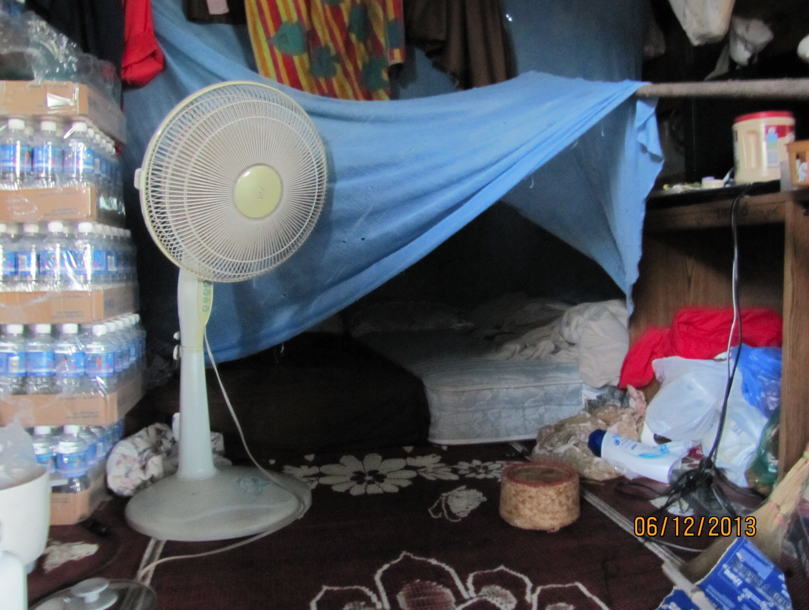 Living conditions at Fat Law are deplorable, the DOL said
The U.S. Department of Labor’s Wage & Hour division executed a search warrant in 2013 and reviewed Fat Law’s records.
“The department made use of a search warrant to get an honest snapshot of the pay practices and working conditions established by the employer and the documented effort to hide evidence and witnesses from inspection,” said Juan Coria, acting regional administrator for the Wage and Hour Division in the Western Region. “With the warrant, we obtained unhindered access to employee and payroll documents reflecting names and payment disbursements to workers employed at the farm, including employees paid only in cash. We will continue to protect workers, prevent abuse and enforce labor laws, particularly where workers are vulnerable and violations are so egregious, as in this case.”
Investigators discovered numerous violations including that Fat Law’s owners treated two main groups of workers very differently: Filipinos from the Philippines were paid $7.25 per hour and overtime, and Laotians were paid $5 per hour in cash, without overtime, for an average of 70 hours per week.
Trotter said the disparity in pay could lead his department to refer the case to the U.S. Equal Employment Opportunity Commission for further investigation.
And while it isn’t illegal to pay Laotian workers in cash, the case may warrant investigations by other agencies to determine if tax, insurance and employee mandate provisions were violated, Trotter said.
Farm Owners Go on the Record
While the federal decree signed by Seabright approved the judgement against Fat Law’s Farm formalizing the fines and violations, Alvin Law, spokesman for Fat Law Farm, said the document doesn’t tell their side of the story.
“Many allegations were also made about us and there are two sides to every story,” Alvin Law said.

U.S. DOL said living and working conditions at Fat Law are unsafe
The Fat Law farm employs 40 workers in its $5 million a year business, and said on its web site that its mission is to "provide global consumers year-round with fresh Hawaii grown Sweet basil, Thai basil, and other Asian herbs."
Alvin Law maintained Fat Law Farm does not have to pay minimum wage if workers are given a place to stay or meals.
“Most workers would rather be paid less in minimum wage and have a place to stay and eat, rather than be paid the minimum wage and commute to work. This is what we offered and what some of the workers wanted," Alvin Law said.
Trotter said it doesn’t matter what agreements workers and employees enter into, because that does not trump the statutory standards and minimum baseline standards relating to housing, transportation and pay.
Alvin Law maintained "workers were supplied a kitchen, lodging and laundry area" and said because the farm provided housing, Fat Law should have had a credit toward wages.
However, Rosalez countered that the credit toward wages is only considered when housing is not substandard. Rosalez said it is “shameful” that Fat Law would consider the living conditions “standard.”
The U.S. Department of Labor’s Wage & Hour division went even further in its report, calling the Fat Law Farm housing “deplorable."
Alvin Law also maintained there is an exemption for overtime for agricultural workers, which Fat Laws Farm was following.

Fat Law maintains it provided kitchen facilities to workers but the DOL said that is shameful.
“Most of our workers were under the exemption. However, what is not clear is that if a farm handles produce from another farm, even though the exemption is broad, the cases appear to indicate the exemption for overtime is lost. So during a work week one of our workers could handle 50 boxes of produce, and be exempt from overtime, but if they handle one box from another farm, the exemption is supposedly lost,” Alvin Law said.
“The bottom line is the rules are complex and we are working with the Department of Labor to become in compliance. We would suggest working with the DOL if there are any compliance questions since many of the standards and rules are not apparently obvious to small farmers,” Alvin Law said.
“Elements of Human Trafficking”
The U.S. Department of Labor’s Wage & Hour division began its investigation into Fat Law and other Oahu farms after a series of Hawaii Reporter stories highlighted how Laotian workers are trafficked from Laos to Hawaii via a B2 visitor visa scam and then placed on one of several Asian vegetable farms where they are subjected to deplorable working and living conditions, underpaid, and essentially are living in servitude for years.
Alvin Law said there are no illegal foreign workers currently employed with Fat Law, but didn't answer whether the farm had employed illegal workers in the past.

Kathryn Xian is head of GirlFest and the Pacific Alliance to Stop Slavery.
Kathryn Xian, founder of the Pacific Alliance to Stop Slavery, is an advocate for farm workers who have been trafficked in Hawaii. Her organization, which documented and reported the labor violations on several farms along with Hawaii Reporter over the last two years, is named as one of the entities Fat Law Farm must report its compliance efforts to.
"We are very pleased to see this step toward justice accomplished on behalf of the exploited workers on Fat Law Farms,” Xian said, who is also a candidate for Congressional District 1. “It's an embarrassment to the State that these offenses have been going on for so long and even continue on other Hawaii farms.”
The U.S. Department of Labor’s Wage & Hour division also put in its judgment that Fat Law must not hold the passports of workers, refuse to let workers leave the farm, or order workers to pay a fee as a prerequisite to being hired, which Xian noted are all elements of human trafficking.
“We've been hearing serious complaints from these victims of human trafficking which also include labor law violations, the latter which was addressed by the great work of the U.S. Department of Labor,” Xian said.
Alvin Law maintains the allegations by the Department of Labor against Fat Law spelled out in the judgment is a misunderstanding, and the farm didn’t keep anyone’s passport, prevent workers from leaving or charge a fee to new hires.
“This is an allegation and could have been a misunderstanding with the DOL. Fat Law Farms respects their employees and they are free to come and go from the farm. It is in our new employee handbook,” Alvin Law said.
In terms of passports being withheld, Alvin Law said: “This may have evolved with workers asking us to hold their passports. Our current policy is if anyone gives us a passport, we will make a copy for our records and then return it to the worker.”
Rosalez said the U.S. Department of Labor participates on a human trafficking task force and said where elements of human trafficking are detected, the appropriate agencies will be brought in to investigate.
Pesticide Poisoning Concerns Not Addressed

Xian said another concern, which the U.S. Department of Labor has no jurisdiction over, is how workers are applying pesticide on produce.
On many Oahu farms, foreign workers hired as pesticide “sprayers” get sick and have even died as a result of repeated, excessive exposure to this pesticide.
Several of the workers on Oahu farms who Hawaii Reporter spoke to through translators cannot read product labels and warnings because they are written in English, so they may not mix or spray pesticides safely.
In many cases, Hawaii Reporter found workers are not given protective gear by Oahu farm owners and don’t have the proper training to apply pesticide safely on the fruits and vegetables they grow. The fruits and vegetables are then sold at Hawaii’s farmers’ markets and grocery stores and also are shipped overseas.

pesticide on Oahu's farms
“We also hope that soon, the serious offenses related to the misuse and toxic effects of pesticides, used on these farms, comes to light publicly. These workers suffer more than just wage violations. They are at risk of significant poisoning by these pesticides which they are forced to spray on crops that end up on our dinner tables,” Xian said.
In 2012, Fat Law Farm, which deemed itself "King of Basil” in Hawaii, was ordered by the state Department of Health to destroy its entire basil crop – all 29 acres – because it used an unapproved pesticide.
Through spot testing, state investigators found the farm was using the pesticide methomyl at two of its farm properties. Methomyl is toxic to humans and for that reason was unapproved for use on some foods.
State Department of Health spokesman Gary Gill then confirmed the sale and use of pesticides are strictly regulated because they are dangerous to the untrained and unprotected sprayer in concentrated form.. Improper use can negatively impact both sprayers and consumers, Gill said.
Problems at Other Law Farms
The Law family is well known in the farming community. In addition to Fat Law, Tommy Law and Tony Law, brothers to Frank and Tim, run farms on Oahu. The family is originally from Laos, and started farming in Hawaii in 1986.
In 2011 and 2012, Hawaii Reporter produced a series of investigative reports related problems involving pesticide and working conditions at both Tony and Tommy Laws’ farms.
While the Fat Law Farm civil judgment is significant, Xian said there are abuses at many other farms across the island that need to be addressed by federal and state agencies.
“We hope that more investigative work will be done both on the Civil and Criminal level to expose the rampant exploitation of farm workers in Hawaii,” Xian said.
Editor's note: Photos of Fat Law Farm were provided by the Department of Labor at Hawaii Reporter's request.
Friday, April 11, 2014
So someone tell me why Hawaii has a low voter turnout and why it matters
“
"The state was last in voter turnout in 2008 and 2012, with its rate decreasing 4.6 percentage points over those years.
"It was the only state with turnout below 50 percent in 2008 and the only one with less than 45 percent turnout in 2012."
”
by Larry Geller
Every so often a news story (or editorial page column, in this instance) 
Richard Borreca took up the issue in today’s paper, also commenting:
The people who show up will rule.
[Star-Advertiser p. A13, Elections chief struggles to increase voter turnout, 4/11/2014]
Well, not exactly. The politicians who can attract the most moola from developers and other moneyed interests rule. Our role as voters is merely to give them the opportunity.
I would love to see the newspaper or other media entity invest in a poll or a study to find out why Hawaii doesn’t vote. Perhaps there has been such a study. If so, we need to see the results in print, alongside articles like this.
But to the point. So what? I know voting is important. No argument. But as long as no crazy faction has taken over (in an attempt to “rule” perhaps), and as long as the outcome pretty much represents the wishes of the population as a whole, so what?
Ok, so, the state’s Chief Elections Officer wants to increase turnout.
How? Without knowing why people are not voting, how can we plan an effective intervention? How can the Chief Elections Officer maximize his campaign, given his limited budget? There could certainly be multiple, if not myriad, reasons why a person didn’t vote.
Do we even want to spend state money to improve a statistic?
Hawaii has all kinds of problems—this may be among the least of them. I would place it way down on the list, below tooth decay, struggling schools, pathetic urban planning and wasteful or ineffective government administration. You might have your own list of gripes, and I’ll bet low voter turnout doesn’t compete with most of them.
The low turnout has not prevented us from having a government, and more votes may not actually change anything for better or for worse. So I really want to see an analysis and discussion.
In some countries there is a statutory fine if voters don’t cast their ballots, though I understand those laws might be spottily enforced, if at all. Here, we have the freedom to let our neighbors carry the water for us. Which is better—to be purely democratic about it and respect the right not to vote, or to impose some kind of sanction, material or otherwise, in an attempt to gather more paper ballots and improve the numbers?
Bottom line for me—I’m tired of articles rehashing that we have a low voter turnout unless they can explain why that is and why that matters.
Monday, April 07, 2014
State appears to have cheated Hawaiians out of $150-200 million on Kakaako land transfer
“
Abercrombie described the Kakaako proposal as "comprehensive," not "universal." But, he said the settlement would well exceed $200 million because the land — described by the governor as "prime" — would grow exponentially in value.--State Offers OHA $200M Kakaako Land Settlement (Civil Beat, 11/16/2011)
”
A rally has been called tomorrow (Wednesday, 4/8_ 11:00 a.m. -2:00 p.m. at the State Capitol by the Friends of Kewalos, to protest legislation that, if passed, will permit residential development in Kakaako Makai).
by Larry Geller
Checking through news coverage of the transfer of state land to the Office of Hawaiian Affairs (which, it should be noted, is itself part of the state government), the valuation of around $200 million dollars for the land was seldom challenged. The value of the land is key—the transfer was supposed to wipe out debt that the state has owed OHA.
It looks like OHA (and hence its Native Hawaiian beneficiaries) has been cheated. Even besides that, it looks like the transfer is being used to shove residential developments on Kakaako Makai down all of our throats.
Although the state is obligated to pay OHA revenue that is generated from ceded lands, it has not done so. Side comment: It hasn’t put Native Hawaiians on their homelands, either.
So this deal was supposed to settle it. More recent news reveals that the value of the land, in the absence of residential development which is currently not allowed, would be closer to $50 million. If so, OHA has been cheated of $150 million. Wait a moment—OHA knew this, so can one really say they were “cheated?” OHA’s appraisal of the land deal, done by Medusky & Co., Inc. acknowledged that residential uses of that land are not permitted.
The claim that the transferred land is prime and “would grow exponentially in value” appears to have been an inexcusable lie.
But is even $50 million a fair price for land that would need extensive reclamation and in any case is threatened by sea rise due to climate change?
![Under water[3]](https://blogger.googleusercontent.com/img/b/R29vZ2xl/AVvXsEg3HRLFYFnl_FC4Hw4GTnRqokn267KsoFUqdcF2QDMfVlh5sFfNIMOx9krTl3i-T-MdC7m025tGfoqU5CsbG_8QxnX_hjam_Tff3c2WP_rYp9LdGgFqmHO8KoiPrsz8ny3HcAyKQQ/?imgmax=800 "Under water[3]")
![Evacuation map[2]](https://blogger.googleusercontent.com/img/b/R29vZ2xl/AVvXsEjpe_6URyoZGEPXCUbEdkKilOMgpmksR5t3yxuNimyQNoqAe9-11zahTc7-EXnJDOxbUYBVPXh6DQrKn_UPg5Ro8CNUuF_fiI5YKkeWUvUmqmWdy9dwvDPzdIqnfMThr4m26Gd7-Q/s1600-h/Evacuation%252520map%25255B2%25255D%25255B2%25255D.jpg "Evacuation map[2]")
As explained in OHA’s idea for residential construction in the tsunami inundation zone is, well, all wet (1/30/2014), the pink area in the map above right is the evacuation zone, the inundation zone hugs the water a bit more. Also, the area will be pounded by storm waves and suffer groundwater infiltration long before climate change reclaims it for the sea.
So perhaps OHA allowed itself to be cheated of the whole $200 million.
Now, as you can tell, I personally feel that residential development in this area was, and still is, foolhardy. Kakaako Makai should be preserved for the use of all residents, not turned over to rich sunbird condo dwellers. That’s what 
The Star-Advertiser did a good job of exposing Governor Abercrombie’s campaign contributions related to Kakaako development in their front-page story on March 30, 2014.
But by holding such a personal view, am I saying that I do not believe Native Hawaiians should be allowed to realize full value from the land they have been “given?” That’s part of the dilemma the “$200 million” OHA deal presents. And no doubt, it will be part of the pressure applied to state legislators to approve residential construction in Kakaako Makai.
It’s not for me (or anyone) to suggest what is best for Native Hawaiians. But somehow, creating contention between the valid claims owed by a delinquent state government and the many who oppose this use of the land, and which specifically benefits the greedy development lobby, is also not right.
If the state owes $200 million, it should make arrangements to pay it, not pull tricks on anyone, and certainly not create yet another level of oppression in the “aloha state.”
Friday, April 04, 2014
Dear Mr. Speaker: Just Say No to outrageous waiver requests
by Larry Geller

A: Two: A committee chair and the Speaker of the House
I know that we can’t do much about abuses in Washington, but we can hold our own legislative leaders to a higher standard. We can hold them to their own standards, in fact. How radical is that?
Corporations have not (yet?) taken over the Hawaii Legislature. We, the people, are still supposed to have an opportunity to review bills and give testimony. This means, for example, that the Legislature should follow its own rules requiring public notice.
Check out the hearing notice below. The public was given exactly 21 minutes notice.
Sure, there must have been some argument for why such short notice was requested, but what about transparency and fairness to the public? Some of the bills on the agenda don’t look like breaking the rules is needed.
Update: Just after posting this article I learned that the House Judiciary committee posted notice of a hearing for SB2048 Relating to Cable Television Systems, just 61 minutes before it was to be held this afternoon. That hearing notice is attached at the very end of this article.
Why we should care
In the past, legislators have run roughshod over the public interest, so it pays to remain vigilant:
This [2006] session has been unusual in the number of procedures or rules that have been bent, each time with the effect of keeping the public in the dark on legislative activities.
[House Minority Leader calls attention to breach of 24-hour notice for 30 bills, 4/20/2006]
Earlier that same year the public was royally screwed by the House.
A nasty maneuver introduced a 61-page amendment without public review, killing the gas cap law. We all have been paying for that at the pump, thanks to an undemocratic attitude that says "anything goes" if legislators can get away with it.
It was an expensive lesson for the public, but profitable for the energy lobby (and no doubt for the campaigns of the legislators they supported).
See the details below the jump.
A March 22, 2006 article, Capitol Crime, explains how legislators connived with the energy industry in Hawaii to block the public from reviewing a bill or providing input to their decisionmaking process. This article refers to a bill that killed Hawaii’s gas cap. The language was made available on a Wednesday only at a legislator’s office, and only if you knew about it, for a quick-and-dirty joint committee hearing Thursday morning. With the office closed for the evening, no copy could be obtained. Clever, huh?
Thursday at 9:00 in room 312, three House committees will hear a Gas Cap bill. This should be a raucous public event, with gasoline-hungry consumers in one corner of the ring, the oil barons in the other, and a dozen or so legislators watching to see which side will come out on top. The trouble is, it won't be a fair fight. The House has rigged the match in favor of the oil barons
…
Normally, bills are introduced at the beginning of the session, go through several hearings, cross over, and are heard by the other house. Thursday's gas cap bill just came on the scene. The chase is on, and you are the driver.First, you have to find a copy of it of course. You can only pick up a copy of the 61-page bill (yikes!) in room 314. Tough luck if you live on another island, in Waianae or the North Shore. You're not intended to participate, sorry.
If you can get one, speed-read it, type testimony at 1000 words a minute, then rush down to the Capitol to confront the oil barons who of course know exactly what is going on. You can bet they have copies. Can you win this high speed chase?
So the oil barons are prepared, the public is not. You can imagine what might result from this imbalance. May as well kiss your wallet goodbye, or just give Chevron your second mortgage and let them take care of it for you. Highway robbery indeed.
Honest, I don't know if this bill is a good one or not, I don't have a copy yet, and I can't get one unless I go over there tomorrow. I'll never be able to read it in time to prepare testimony.
The House cannot hold a "real" public hearing because the public doesn't have access to the bill that will be debated.
Killing the gas cap was no small thing. The public should have been given ample time to review the language and have a say. We were all cheated by the legislative leadership.
So we must remain ever-vigilant. Are we being cheated again? It’s hard to tell with only 21 minutes notice.


