


Saturday, June 30, 2007
Newspapers' high tech darling about to skip town?
Hoku Scientific Inc. downsizing in Kapolei describes a process that is all too familiar: a high tech company starts up, becomes the shining star of Hawaii's high-tech firmament, and then moves jobs away from the islands.
No matter. Promotion of high-tech continues. In place of Hoku, expect another company to take its place in the firmament one day.
When does this stop? You know what they say about doing the same thing over and over again and expecting a different result?
Hoku has to do what its bean counters require in order to maximize profit:
The company has increasingly been focusing on its polysilicon plant in Idaho.
The $6 million Kapolei headquarters was opened in late 2005. At the time, the 14,000-square-foot office, manufacturing and research and development facility at 1075 'Opakapaka Street was double the company's former digs, a 7,000-square-foot facility in Kalihi.
Now, Hoku may well be a great company to invest in. Investors are not usually philanthropists, however, and they expect a return on their money. If profits require that the company move to the Mainland, that's exactly what the company will do.
Somehow the papers fail to distinguish between a good investment and what's good for Hawaii. Any change in Hoku's stock price gets an article at or near the top of the business page. I know there are better investments out there, why no stories? Because Hoku Scientific is a Hawaii company. For now.
We need an economic model of Hawaii that will suggest sound government policies. Right now, it's possible that the best local "high tech" jobs may be in DBEDT and other organizations promoting high tech. How much are we paying these people?
Now, it would be strange if there were not some high tech here (or in Wyoming, for that matter). And there is, on Maui, for example. That's not the point. The point is employment. Jobs! People are desperate for opportunities better than sweeping floors or making beds in hotels. With high-tech companies taking their tax breaks and then moving work to the Mainland, we are in fact subsidizing jobs on the Mainland instead of here.
Is there an alternative to tourism and to building more and more houses until we destroy what's left of Paradise? It would be great to work at finding it.
The governor is chasing after an already dead dream with her "Innovation" initiative. It's really no innovation at all, just another way to subsidize Mainland jobs. Our best engineering graduates will continue to leave the islands seeking better jobs elsewhere unless we can find something for them to do here.
Robotics are an excellent way to interest our students in science and engineering, but everyone knows that robots won't be built here. We're working on one piece of the problem (education) while not providing jobs for our educated graduates.
What we need is innovation in planning for the state's future.


Saturday, June 23, 2007
Hawaii Mainland prisoners to be housed in new but unregulated facility
Because only Hawaii prisoners will be serving time inside the campus-style facility, the prison will observe island holidays, accommodate natives’ polytheistic religious beliefs and even serve Hawaiian food.
Unfortunately, conditions for these prisoners may be far from idyllic. The AP article fails to mention that as a private prison housing only out-of-state inmates, the CCA facility will not be subject to protective Arizona state regulations governing other Arizona prisons. Without state regulation, CCA can run the prison basically as they wish, placing Hawaii inmates at risk.
And there is a great risk. In April, 2003, for example,the state of Hawaii was sued by an inmate of the CCA-run Florence Correctional Center who claimed he was badly beaten by a prison gang that was given unprecedented privileges by the warden and guards. In 2006 a drug ring was discovered in the same prison, run by the prison kitchen supervisor and truck drivers from a food service company.
Aside from the lack of protection at the Eloy facility, the contract for the new prison assures that Hawaii inmates will continue to be shipped to the Mainland for some time, separated from their families and subject to the gang activity that has plagued these prisons.
Finally, there are still questions clouding the letting of the non-bid contract itself (see the January 21, 2007 Advertiser story, State's prison deal 'unusual'.
An Arizona mayor who signed off on part of a multi-million dollar government contract to house Hawaii inmates in prisons on the Mainland also is an employee of Corrections Corp. of America, the company that holds Hawaii inmates at the privately owned Arizona prisons.
The contract was not let out for bid because it was a government-to-government transaction between the state of Hawaii and Eloy, Ariz., that is exempt from competitive bidding.
Sure. The mayor worked for CCA and it is a government-to-government contract?? Eloy is heavily dependent on CCA for the jobs they bring to the town.
Not only is Hawaii's practice of sending inmates to the Mainland contrary to our interest as citizens in rehabilitation, it is equivalent to sending them off for an education in crime, which they can practice on us when they are eventually released back to the islands.
What is needed is reform of Hawaii's drug laws and investment in proven treatment and prevention programs as an alternative to incarceration. We could easily empty the Arizona prison and lower, instead of potentially raise, the crime rate back home.
Wednesday, June 20, 2007
Elderly and disabled wait in vain for stalled State elevator repairs
For months, elderly and disabled residents in four state-owned housing projects have had to wait as long as 30 minutes for elevator service, virtually marooning many tenants in their upper-floor apartments and endangering others in need of emergency medical care, according to state officials and building residents.Jim Dooley's article today shows that the state isn't actually working at all. Amazingly, we find this disturbing statement:
Officials of the state Public Housing Authority blamed the problems on obsolete equipment. The officials said they are working to repair the elevators, but the work may take at least three more months.
Despite the availability of parts for the Kalakaua Homes elevator, the state has no immediate plans to repair them. The state has lost confidence in Tomihara and his company, Hawaii Vertical Transportation Inc. [the current repair contractor], and has decided not to attempt more repairs until a new company can be selected.It's easy to be an armchair critic since I'm not privy to what plans may be afoot for emergency repairs, but state-run housing has been plagued with chronic elevator problems for some time. As the earlier Advertiser article points out, the situation endangers anyone in need of emergency medical care.
The problem should be considered a public emergency and the state should deal with it immediately. Instead of stopping all repairs, those parts should be immediately ordered and put on a plane to Hawaii. If our state government can't do it, maybe Jim Dooley could render a further public service by offering to make one more phone call for them.
But do seniors matter to this Administration? Governor Lingle might want to do something to make up for withholding funds for Kupuna Care until just before election day last year. She could make these repairs happen.
If she can't, maybe her new-found buddies in Indonesia can lend a hand. Sorry, I can't get it off my mind that we are rendering assistance to the Indonesian military for helicopter repairs and we can't even fix a couple of elevators.
The other thought that entered my mind: I'm glad the state won't be running the trains in Honolulu.
"Personnel is Policy" in Hawaii
The phrase "personnel is policy" first became widely used, according to Google, in the Reagan
It's the same in Hawaii, and explains why this past legislative session saw moves to restrict the governor's power of appointment. Lingle is in her last term, but her legacy will linger on through her appointments of judges and others to offices under her control.
And as noted by Doug White in an article yesterday in Poinography, the HCRC is composed entirely of Lingle appointees:
They are an Army general, an HR professional, a corporate lawyer, and an educational filmmaker.Lingle has appointed supporters and their spouses to other key positions. It can be argued that the bungled firing of UH President Evan Dobelle by a board of regents stacked with Lingle favorites was an act of political revenge. That one backfired badly, but these politicos' actions generally escape the public eye. As Doug notes in his post, HCRC minutes seem not to be online, so none of us know what they are usually up to.
It's reasonable to challenge unwanted actions perpetrated by poorly credentialed political appointees, and the people of Hawaii should do so.
Monday, June 18, 2007
Getting to know Hawaii's new partner, Indonesia
So please excuse the length of this post. I could have skipped it if our local press carried even a fraction of the truth about the regime that Lingle has been in talks with. Nor can I really do justice in one article to the horrors that have been perpetuated by her new friends.
Indonesia and East Timor
From a Yale University Genocide Studies Program article dated January 19, 2006, UN verdict on East Timor:
THE Indonesian military used starvation as a weapon to exterminate the East Timorese, according to a UN report documenting the deaths of as many as 180,000 civilians at the hands of the occupying forces.The question begs to be asked: did Lingle meet or negotiate with anyone involved in these crimes against humanity? Will the assistance she has committed (e.g., helicopter repairs) permit them to commit further atrocities?
...
Napalm and chemical weapons, which poisoned the food and water supply, were used by Indonesian soldiers against the East Timorese in the brutal invasion and annexation of the half-island to Australia's north, according to the Commission for Reception, Truth and Reconciliation report.
The violence culminated in the 1999 reprisals for the independence vote, when the Indonesian military and its militia proxies rampaged through East Timor, killing as many as 1500 people and destroying most of the towns.
The report blames the Indonesian government and the security forces for the deaths of as many as 183,000 civilians, more than 90per cent of whom died from hunger and illness.
It claims Indonesian police or soldiers were to blame for 70 per cent of the 18,600 unlawful killings or disappearances between 1975 and 1999.
Based on interviews with almost 8000 witnesses from East Timor's 13 districts and 65 sub-districts, as well as statements from refugees over the border in West Timor, the report also relies on Indonesian military papers and intelligence from international
sources.
It documents a litany of massacres, thousands of summary executions of civilians and the torture of 8500 East Timorese - with horrific details of public beheadings, the mutilation of genitalia, the burying and burning alive of victims, use of cigarettes to burn victims, and ears and genitals being lopped off to display to families.
Thousands of East Timorese women were raped and sexually assaulted during the occupation and the report concludes that rape was also used by the Indonesian military as a weapon of war.
"Rape, sexual slavery and sexual violence were tools used as part of the campaign designed to inflict a deep experience of terror, powerlessness and hopelessness upon pro-independence supporters," the commission found.
The deaths amounted to almost a third of East Timor's pre-invasion population.
The report found that after taking into account a peacetime baseline mortality rate, the number of East Timorese whose deaths could be directly attributed to Indonesia's deliberate starvation policy was between 84,200 and 183,000 people from 1975 until 1999.
East Timor, one of the world's poorest nations, with a population of just over one million people, had a pre-invasion population of 628,000.
The Indonesian security forces "consciously decided to use starvation of East Timorese civilians as a weapon of war", the report says. "The intentional imposition of conditions of life which could not sustain tens of thousands of East Timorese civilians amounted to extermination as a crime against humanity committed against the East Timorese population."
A culture of impunity prevailed in the occupied territory and "widespread and systematic executions, arbitrary detention, torture, rape and sexual slavery was officially accepted by Indonesia", the commission found.
"The violations were committed in execution of a systematic plan approved, conducted and controlled by Indonesian military commanders at the highest level."
US Pacific Command in bed with Indonesian murderers
The US Pacific Command doesn't mind hobnobbing with murderers. Lingle was to be briefed during her visit on recently concluded joint military exercises. According to this article, Indonesian Major General Noer Muis, who has been indicted for crimes against humanity in East Timor, participated in the exercises and his photo was featured on a U.S. Army, Pacific website.
While the US condemns the Indonesian atrocities out of one corner of its mouth, it encourages the perpetrators out of the other. This has not gone unnoticed in the international community.
Sixteen NGOs wrote [in Nov. 2004] that they are looking to Congress "to provide leadership by ending all assistance to the military which so damaged our country... Restrictions on military aid are essential to efforts to end impunity for the horrendous crimes committed in East Timor. The restrictions are crucial to preventing similar crimes in Indonesia."As we wrote previously, the US House may act to cut or reduce aid to Indonesia because of its failure to reform its military.
"We know that there are people within your government who argue that increased U.S.-Indonesia military relations will have a positive impact, but such beliefs are wrong and threaten many lives," the NGOs wrote. "The more powerful and unaccountable the Indonesian military remains, the slimmer the chances for stability and democracy in Indonesia."
Aceh and US-supplied arms and ammunition
The Indonesian military committed massacres comparable to those committed in East Timor in Aceh province. They could not have committed their atrocities without US help, but that does not mean that Hawaii should become a part of it. Moving now to Aceh and Papua, from a post-tsunami article:
In Aceh, over 12,000 civilians have fallen victim to military operations that have included mass sweeps and forced relocations. These operations, almost constantly since the late 1970’s, have entailed brutal treatment of civilians including extra judicial killings, rape, torture and beatings. While the military’s quarry in these attacks, the pro-independence Gerakan Aceh Merdeka or GAM has also been responsible for human rights abuses, the State Department's Annual Human Rights reports have consistently reported that most of those civilians died at the hands of the military.The Indonesian military stepped up its actions to crush the popular Aceh separatist movement after the tsunami, opportunistically using the disaster to crush it:
Throughout this period, extending from 1965 to the early 1990's the U.S. military maintained a close relationship with the Indonesian military, providing training for thousands of officers as well as arms. From the late 1970’s to 1992, that training included grant assistance under IMET [International Military Education and Training]. The arms provided by the U.S. were employed by the Indonesian military not against foreign foes (the Indonesian military has never confronted a foreign foe except for brief clashes with the Dutch in West Papua) but rather against their own people. In the 70's and 80's, U.S.- provided OV-10 Broncos bombed villages in East Timor and in West Papua. Military offensives conceived and directed by IMET-trained officers against usually miniscule resistance caused thousands of civilian deaths.
... It’s unfortunate that it took the devastation of a tsunami to get the world to turn their heads. As TV viewers cringe and gasp at the piles of bloated bodies being bulldozed into mass graves, little do they know that mass graves are commonplace in Aceh. It’s one of the worst situations of repression in the world. The military occupation of Aceh, designed to defeat an armed independence movement and operated by convicted human rights abusers in the Indonesian military (Tentara Nasional Indonesia), has killed tens of thousands of civilians over the last three decades. The known murderers are now in charge of relief efforts in the worst-hit area of the tsunami disaster that has left over 100,000 people dead. The number of casualties are rising, as the politically driven bureaucratic mess of the Indonesian authorities restricts the flow of aid from to where it’s most needed.Finally, moving to Papua, it is alleged in this April, 2007 story that the Bush administration suppressed evidence of the Indonesian military's involvement in the deaths of American citizens that might have scotched Bush's announcement of a "new era of military co-operation" with Indonesia.
As sympathizers of tsunami victims pour in donations, they need to know where the money goes. They need to know of not just the present destruction but the decades long devastation that has been forced on the Acehnese people.
Life in Aceh before the tsunami was no paradise. Even though Aceh is rich in resources, the people live in poverty with high rates of hunger and poor nutrition. A massive natural gas operation accrues high profits for Exxon Mobil and the government in Jakarta but leaves the people of Aceh oppressed and empty handed. In response to continuing exploitation from the Indonesian government, people in Aceh demanded independence. For decades, armed rebels known as the Free Aceh Movement (Gerakan Aceh Merdeka or G.A.M.) have battled the Indonesian military, demanding a referendum on independence from Indonesia. The Indonesian military has used G.A.M. as a scapegoat, blaming them for the lack of aid distribution in post-tsunami Aceh. Shortly after the tsunami hit Aceh, G.A.M. declared a ceasefire to ensure safe movement of humanitarian relief workers to locate victims, distribute aid and allow family members to track their loved ones.
Under martial law, the people of Aceh are not free to move. The military conducts regular sweeps where they stop cars on the road and pull people out. If you don’t have proper ID you’re taken into custody. If you resist, you are beaten. If you are on a military intelligence list of activists or sympathizers, you “disappear”. There is systematic torture, rape and murder. Mass graves pile high with victims of military beatings and massacres.
The Indonesian military is using the tsunami devastation as an opportunity to further implant their military power. They continue to attack and harass the civilian population. More lives are being lost as the military takes control of all relief efforts. The Indonesian military blames the G.A.M. for the imposed tight security restrictions on aid workers, even though the G.A.M. has publicly announced their appreciation: “We extend our deepest gratitude to the peoples and governments of countries that have not only shared our griefs and losses but have come to help our suffering people in such a swift, massive and unprecedented generosity.”
Meanwhile, reports of military control hampering relief operations are as follows:
Local NGOs are forbidden to participate in the distribution of aid to survivors and the families of victims.
Aid packages are being stock piled in Banda Aceh and Median airports and are not being effectively distributed.
Survivors lined up outside distribution centers are denied aid if they cannot produce identity cards. Sometimes they are harassed and beaten.
Donated food is being sold at black market prices outside of distribution centers.
The only hospital still functioning is operated by the military. Some international medical personnel are denied access.
Evidence of Indonesian military involvement in the deaths of two American citizens has been suppressed, according to a report released today by Joyo Indonesian News Service and Pantau Foundation. U.S. Secretary of State Condoleezza Rice, and other senior administration officials, have been misleading Congress and the public about a 2002 assault near the gold and copper mine of Freeport McMoRan (FCX) in the remote Indonesian province of Papua. The Bush Administration sees Indonesia, the world’s most populous Muslim nation, as a key ally in the Global War on Terrorism.Speaking of terrorism, as one should when mentioning the Indonesian military, one cannot avoid their long-term actions against the people of Papua, continuing to the present. Just in one short period
From 1969 until October 1998 (five months after the overthrow of former Indonesian military dictator President Suharto), West Papua was designated as a “military operations zone”, giving the military free reign to combat the resistance movement. Some 100,000 people have died during the Indonesian occupation.These actions have been carried out by the Indonesian government and its military against its own people. If Saddam Hussein was executed for doing this on a smaller scale, how dare we cooperate and support the Indonesian military in any way as it continues to do the same?
...
Tom Benedetti from Canada’s West Papua Action Network wrote in the January 2 [2006] International Herald Tribune that Indonesian military activity had been escalating in West Papua, and the number of troops there has reached an estimated 50,000.
Benedetti cited three major obstacles to peace in West Papua. The first is that “foreign journalists and most researchers and aid workers are still banned from West Papua. Unlike in Aceh after the tsunami, no-one is looking.” The second is that the Indonesian military “earns millions selling security services to resource companies such as the gold-mining company Freeport-McMoran”. And finally, the majority of the Indonesian military’s budget is funded from its own legal and illegal business ventures, and “West Papua is the Indonesian military’s most lucrative area of operations”.
I'm sure the governor's office will claim we are only providing disaster preparation assistance. That would be a good thing, but there are non-governmental organizations that we might work with.
We are all complicit if we allow state money, derived from our taxes, to assist the Indonesian military in any way.
Friday, June 15, 2007
Governor's Indonesia boondoggle derided by Advertiser blog commentators
It still remains to be explained why one would first of all associate with the Indonesian military at all, and second, why pick Indonesia to learn about disaster preparedness, considering that they not only totally botched it, but opportunistically used the tragic event to further crush the Aceh resistance movement. We not only can't learn from them, but we shouldn't be assisting their military in any way.
The commentors had more meat than Vorsino's original posts, which resembled sightseeing notes (it's a blog, so actually I don't mind, and where else would we learn anything about Jakarta?). Especially informative (and critical) were comments by barney and by Roger Schenck. Schenck describes how anything good about the disaster recovery effort in Indonsia can be credited to US assistance, and that this assistance was so effective that the Indonesians sent US troops home prematurely:
The Indoneasian government's response was a disaster equal to or greater than the tsunami itself. Had it not been for the response by the US Military, the disaster would have been much worse. The Indonesian Government was not quick to move in to help the people in Java most affected by the tsunami because of their long-standing opposition of rule from Jakarta. Most rescue missions were flown by US military helicoptors, most medical aid was provided by US military personnel, and all life-saving potable water was provided by US Navy ships anchored off-shore. Despite all the assitance provided by the US military, the Indoneasian governmet feared that the US presence would somehow allienate the people against the Indoneasian government, and demanded that US military cease its humanitarian mission and withdraw from Indoneasia prematurely.Check it out. If we provided most of the disaster assistance, Lingle needs to explain what it is that we can learn from the Indonesians and why she is there at state, rather than personal, expense.
We should not be financing Lingle's try for the Senate out of taxpayer funds
This trip cost big bucks out of the governor's and the department budgets. Even if the state is supposed to have a "surplus," I submit that the money could have and should have been used for something else. Our newspapers might do the right thing and question the costs and benefits of this major boondoggle and its relationship to the governor's personal aspirations.
I read in the paper that seniors' meals are being cut off right here in our own state. How come we can afford to give assistance to Indonesia while our own kupuna will be starving? By the way, did you know that Lingle withheld approximately $500,000 that the 2006 Legislature apportioned to Kupuna Care (which includes meal services to seniors just discharged from the hospital) until just days before election day? How come she's so quick to help the Indonesian military? I know that the governor's habit of withholding funds from necessary social services in Hawaii has nothing to do with her trip, but her sense of priorites rankles. Had she not shortchanged our seniors (and many others) I might not mind it so much if she spreads the largess elsewhere. But it's not fair to starve people at home while conducting some sort of foreign policy with state funds abroad.
Lingle, come home. And please don't withhold any more funds from Meals on Wheels.
The rest of the story on Oahu's spoiled milk
 The recent Honolulu Advertiser story, Bacteria levels souring Hawai'i milk? should leave Hawaii consumers concerned about the high spoilage level of the milk they drink. Following on the heels of national e coli and melamine contamination scares, this only adds to our uncertainty about the safety of our food supply.
 Long-time readers of my other blog, The Freerange Gourmet, already know the rest of the story--the part that the Advertiser didn't tell you--and which you need to know before you pour another glass of milk for your kids: milk is shipped to Oahu from the Mainland in unrefrigerated containers.
We wrote about this 'way back in 2005 in two articles. The first, Scary Dairy -- Frightening food news for Halloween, included this citation from an even earlier Honolulu Magazine article by Joan Namkoong:
"What's interesting--and a bit alarming--is that Hawaii-bound milk is pasteurized in California before shipment, then placed in insulated (but not refrigerated) containers for shipment to the Islands, according to Chin Lee, dairy extension specialist at the University of Hawaii's College of Tropical Agriculture and Human Resources. Once the milk arrives at Meadow Gold, a minimum of four to five days after pasteurization, it is pasteurized again before it is bottled.
"Hawaii is the only state that allows repasteurization of milk, says Lee, which can pose a food safety issue."
We asked then and ask again today: "How do you feel now? Did you drink any milk today? I'm sure that one can pasteurize most anything and then drink it, but do we really want to do that?"
After a few phone calls we learned that Costco brings its milk to Hawaii in refrigerated containers. We had already been buying our milk at Costco, and we're certainly not going to switch now, after the Advertiser story.
Let me repeat Mr. Lee's warning, "Hawaii is the only state that allows repasteurization of milk, says Lee, which can pose a food safety issue," and ask why this important fact didn't appear in the Advertiser story? Would the paper have lost Meadow Gold as an advertiser if they revealed the awful truth about the milk we drink in Hawaii?
Wednesday, June 13, 2007
US House considers cutting off aid to Indonesian military even as Hawaii's governor promises close cooperation
While local press coverage places emphasis on assistance with Indonesia's disaster preparedness, overseas articles have put the military cooperation first and the disaster aid second. See for example this Xinhua article, Indonesia, Hawaii enter military cooperation.
As you read the following articles, decide whether you think that Hawaii, with its spirit of Aloha, should be providing assistance to the TNI, and what the consequences of this support might bring down upon the state. If you're a resident of Hawaii, do you want your government associating with this regime in any way?
This story aired today (14 June, Australia time) on ABC, Radio Australia, US considers cut in military aid to Indonesia:
The United States House of Representatives is again considering cutting military aid to Indonesia because of its failure to reform its military and to prosecute senior officers for the violence in East Timor in 1999.The Indonesian government itself supports torture and atrocities against its own people by its military. Massacres of East Timorese and Aceh residents in the past have led to world-wide condemnation although the news was not well covered by the mainstream US press. At present there are accusations of torture in the Indonesian provice of Papua. See another Radio Australia report, Mistreatment claims from human rights monitors, Papua prisoners:
Last November the US agreed to resume military ties with Indonesia after 1999's violence in East Timor caused them to be cut.
Indonesia argues that it is making reform progress even though at least 60 per cent of the military's budget still comes from its own businesses.
But our Jakarta correspondent, Geoff Thompson, says failure to prosecute senior military officers, such as former military chief General Wiranto, and other alleged human rights abuses are fuelling a proposal, now being considered by the US House of Representatives, to cut 25 per cent of military aid.
...
International human rights groups say they are concerned about the Indonesian government's decision to scale back laws restricting the military's business activities.
When Dr Susilo Bambang Yudhoyono became President in 2004, the momentum for reform of Indonesia's notorious military, TNI, had already begun.
A month earlier, Indonesia's parliament passed a law banning military commercialism and committing the government to a takeover or dissolution of all military businesses in 2009.
The newly-elected president pledged to see the legislation through.
However, Indonesia's defence minister, Juwono Sudarsono, has confirmed this week that according to the government's criteria, only six of 1,500 businesses previously identified as eligible will not be classified as commercial interests.
The announcement has disappointed human rights observers, including Charmain Mohamed, a researcher with Human Rights Watch.
She has told Radio Australia's Connect Asia program that the military's pursuit of profits has resulted in human rights violations.
...
"[Human Rights Watch] did lots of research in South Kalimantan where the military is running cooperatives overseeing illegal coal mining activities.
"Because they are much more focused on trying to control the illegal coal mining industry it's leading them to commit abuses - extorting money, beating people who are illegally mining coal and intimidating them.
Former prisoner, Herman Wainggai, says he understands the conditions the prisoners are experiencing.It's probably safe to assume that Governor Lingle, unlike President Bush, reads newspapers and so is aware of the attrocities and the mass killings committed by the people she is arranging to assist.
He spent more than two years in Apepura prison, for raising the Morning Star flag.
The former student activist is now seeking political asylum in Australia.
He says prisoners were beaten regularly.
"Sometimes many students like I've seen the Indonesian military force them and beat them, sometimes they're bleeding from the body," Mr Wainggai told Connect Asia.
He says the conditions are overcrowded and unsanitary with more than 20 people crammed into each small cell.
"For my experience for a couple of weeks I just sleep in the same place, and toilet as well in same place," he said.
"They didn't allow us to come out of the place where put us in jail - 23 people in one room.
"Very bad conditions, no water."
Arbitrary detention, torture 'nothing new'
Special envoy to the United Nations Secretary General for Human Rights, Hina Jilani visited Papua last week and criticised the abuses of rights.
"I have heard credible reports of incidents that involve arbitrary detention, torture, harrassment though surveillance, interference with the freedom of movement," Ms Jilani said.
She also says that human rights monitors have been prevented from doing their work
The front story is still cooperation on disaster preparedness. But why partner with Indonesia? Next can we expect cooperation with Burma on human rights or with N. Korea on high-tech development? I'm getting carried away, but you see my point I hope.
Probably few terrorists pay attention to Hawaii at all (unless they're thinking of an international convention site), but if Hawaii cooperates and strengthens the Indonesian military it well could be courting the disaster that the governor is planning for.
Disappearing tech: Is Oceanit migrating to the Mainland?
Oceanit is one of the most solidly established high-tech companies we have in the state. It would be sad to see them fleeing to the Mainland one day. I'm certainly reading too much into the opening of a DC office, but the thought that this could signal a migration in the future came to my mind. Opening an office in Arlington is a logical step for a company this well established in each of the areas in which it competes.
For most "high-tech" companies in the state, reality sets in sooner or later.
Imagine you are a CEO who enjoys living in Hawaii, and there are even some arguably good reasons for your company to be here. But your clients or customers and your suppliers are in San Francisco or elsewhere, and your competitors have better access to the market and to the parts they need than you do. Nor do customers snicker when your competitors mention that they're headquartered a few blocks from Stanford in Silicon Valley, but they might fail to truly appreciate how awesome it is that your office enjoys a majestic ocean view from its perch high on the golf course in Maui.
Still, you persevere, and in fact your company is doing great work.
So one day there comes a knock-knock on the CEO's door, your door--it's the bean counters come to deliver the reality check. And before you know it, your company will do what it needs to do. You'll call the packers and the movers, sell the surfboard, and make your plane reservations.
Hawaii should be a fairly good place for technology venture capitol, given the generous tax credit and cloak of anonymity that the state grants along with it. It simply adds to the bottom line (at taxpayer expense) and no one need know about the handout. Investors don't care whether a company stays here or moves to where it needs to. In fact, if the company fails to move when it should, the investors ought to beat a path to the CEO's office themselves.
The venture capitalists don't care about generating jobs or improving Hawaii's economy. They simply want the company to succeed and have its IPO so they can realize a generous return on their investment. And so they should, that's good and right and the American way. It's also why it's a mistake for the state to rely only on a tax credit as an incentive and fail to solve other infrastructure problems that might convince companies to remain.
But back to Oceanit. I'm not saying that they are planning to flee. I'm just noting the beginning of that possibility. We saw it happen that way with Verifone and others.
Hawaii is no high-tech paradise, but Oceanit is not conducting their business the way DBEDT promotes the state. None other than Guy Kawasaki put the kabosh on false claims that being in the middle of the Pacific between time zones is a great advantage. It is no such thing, yet we paid state workers to push that angle, and many are still doing that. I also look around for the barf bag whenever I hear someone on HPR claim that Hawaii will become the center of the Pacific in telecommunications or some other field. Unlikely--not impossible, but not wise to bet on. We are already the center of some things, but none that I am aware of produce a sustainable job stream.
We need Oceanit to stay just to prove I'm wrong.
Monday, June 11, 2007
Is Hawaii's governor Lingle setting up a secret military alliance with Indonesia for Bush?
State governors do not travel overseas to make military arrangements on their own initiative. And the arrangements that Lingle is making may not be in the best interests of the State of Hawaii.
Domestic overage of Lingle's trip makes it seem innocuous enough, nothing we need to get riled about. For example, according to KITV:
She is in the country to meet with tsunami experts and government officials to discuss emergency preparedness.Although reports hint that the Indonesian military might step in if assistance from the US Mainland was lagging after a disaster, isn't that rather far-fetched?
There are more questions than answers in these stories. Why exactly should Hawaii depend on distant Indonesia and what might they do for us? Were the Indonesian plans discussed in the secret meetings Lingle arranged to repair our broken disaster communications system? Where's the plan? What happened to the compact between states to assist one another if the feds prove themselves inadequate again?
More: If we can't reach KSSK on the phone, should we try calling Jakarta instead? Before making arrangements for aid from Indonesia, shouldn't citizens be provided at least with an evacuation plan and know where our nearest shelters are located?
Where are our news media on this sudden twist in disaster planning?
Indonesia was notably unprepared when the monstrous tsunami hit. But ok, maybe there is something we can do for them. After all, we get our oil from Indonesia, why not return the "favor."
So leaving the "disaster preparedness" plan aside as a possible decoy, we need to dig deeper on this story to learn its purpose.
News coverage mentions that Lingle's entourage includes State Adjutant General Robert Lee and Major General Vern Miyagi from the U.S. Pacific Command. General Lee's presence makes sense if disaster preparedness is on the agenda, but what is Maj. Gen. Miyagi's role in these talks? His name was not mentioned in an earlier Advertiser story on Lingle's trip.
The Advertiser article yesterday only hints at talks that go way beyond disaster preparedness:
JAKARTA, Indonesia — The governor will meet with Indonesian Vice President Muhammad Jusuf Kalla tomorrow morning, the third of a series of meetings with high-level Indonesian leaders to discuss a state military partnership with the country.Why is Hawaii, a state, involved in high-level talks with the Indonesian military in the first place? Shouldn't Washington attend to intergovernmental affairs? Has Lingle been given some sort of special assignment unknown to the people of Hawaii?
The domestic press has not reported details of Lingle's talks, even though a Honolulu Advertiser reporter is along for the ride. For that info we need to read the overseas coverage:
Indonesia, Hawaii set up military cooperation,
Indonesia and Hawaii would establish military cooperation under a close coordination with the United States Pacific Command in Hawaii, Indonesian Defense Minister Juwono Sudarsono and visiting Hawaiian Governor Linda Lingle said Monday.Indeed it is, and this is why Hawaii, to preserve its security in today's increasingly dangerous world, should have nothing to do with Indonesia. Except to purchase its oil, perhaps (although there are alternatives to that as well).
They told at a joint press conference at the Indonesia defense ministry office here after a meeting that the focus of the military cooperation is on the maintenance of non-lethal military equipment and also on how to deal with natural disasters.
"We should build up cooperation between the TNI (Indonesian Armed Forces) and the Hawaiian National Guard to beef up professionalism at the level of soldiers and low-ranking officers on maintenance of military equipment, such as helicopters and other equipment made by the United States," Juwono said.
"In the coming months, scores of our soldiers will be sent to Hawaii to get trainings of the maintenance which could boost the capacity of troops," he added.
Most of Indonesian military equipment are produced by the United States.
The Indonesian military is widely hated in the region, both by fundamentalist groups and independence fighters. The country suffered terrorist retaliation on Christmas Eve 2000, attacks on Bali in 2002 and 2005, on the Marriot Hotel in Jakarta in 2003 and an attack on the Australian Embassy in 2004.
While some other states have formed relationships with Asian countries, Hawaii should steer clear of Indonesia lest the state become a target in exchange for assisting the hated Indonesian army. It's widely known overseas that US president Gerald Ford and Henry Kissinger, his secretary of state, offered advance approval of Indonesia’s brutal invasion of East Timor. The US provided weapons and military supplies to the regime. Democracy Now! reports that "Thousands of Indonesian paratroopers, trained by the United States, using US supplied weapons, indeed jumping from United States supplied airplanes, were descending upon the capital city of Dili and massacring literally thousands of people in the hours and days after December 7, 1975."
Indonesia's idea of disaster relief as described by Democracy Now! is nothing we need to emulate here in Hawaii (The death toll in the Aceh region of Indonesia was estimated between 170,000 and 200,000):
Following the tsunami, humanitarian officials and human rights groups said the Indonesian military actively prevented aid from being distributed to Aceh. For years the Indonesian military had operated in Aceh in an attempt to quell an independence movement led by the Free Aceh Movement or the GAM. The military reportedly killed upwards of 10,000 in Aceh but exact figures have never been known because Indonesia closed off Aceh from outside observers and put it under martial law.By assisting the Indonesian military and its hated government, Hawaii clearly risks becoming a terrorist target itself. For what return?
Gov. Lingle discussed Indonesia with President Bush during his visit to Hawaii in November, 2006, shortly after the national election shifted power in Congress to the Democrats. See, for example, Bush’s Hawaii visit was a social one, Lingle says. News coverage referred only obliquely to a military relationship with Indonesia and Hawaii's National Guard. One hopes reporters will now dig more deeply into this story.
Hawaii's economy would be devastated should a single bomb be detonated in Waikiki, even without loss of life. Tourists would shun the Islands as they shunned Bali after the tourist bombing there. Our legendary island lifestyle would become a shambles without the one industry that sustains us.
Perhaps the state legislature would consider holding hearings on this questionable relationship with Indonesia and how it might affect us, as well as on the use of state tax-derived monies to further possible Washington objectives.
Lingle may be a governor who is at the moment too close to Washington and too far from Hawaii.
Saturday, June 09, 2007
There's more to the Advertiser story on Bob Awana than appeared in the paper
It seems that the Advertiser's Rick Daysog and Peter Boylan were on to a story about an alleged extortion plot involving Governor Lingle's chief of staff, Bob Awana. Blogger and investigative reporter Ian Lind was working on the same story and could have scooped the Advertiser had he posted something on his popular blog, but Ian was hoping to run it in the Honolulu Weekly. So the daily beat out the weekly.
However, Ian's story is much more complete and satisfying. Check out both: the Advertiser story, Gov. Lingle's top aide helped FBI sting, is here, and Ian's post, international intrigue, is here.
I read the Advertiser story first, and it left me with nothing but question marks. Hey--if someone was trying to extort money from Awana, what was that about? There's no hint in the story. Now, people can always give you a phone call and demand money, or, they may know something about you and demand money to keep the secret. I can't help it, I just wanted to know more. I planned to hit up Google for some info later, since the Advertiser was obviously holding out. Or maybe they were planning to run more details tomorrow, to sell some more papers.
But Ian's blog revealed the missing information, which Google easily confirmed. Ian blogged:
An Indian software professional from Japan and a top state official are at the center of an international criminal case involving allegations of sex and blackmail.The Advertiser hides the details clumsily by reporting:
Rajdatta Patkar is being held in the federal detention center in Honolulu on charges that he threatened to injure the reputation of a Hawaii resident identified by the initials “R.A.”, according to an indictment issued by a federal grand jury in Honolulu in April 2006.
People familiar with the investigation said the alleged extortion was in connection with a trip to the Philippines.Ian's article, supported by reports from Indian websites, describes the intrigue:
According to the Indian publications, Patkar contacted Awana and demanded cash after reading his girlfriend’s e-mail and discovering she was allegedly the victim of "sexual exploitation" involving the governor’s top aide. The federal indictment makes no mention of this sex allegation and no evidence has been made public that would support the charge.Now, I really don't care what went on or didn't in the Philippines between two consenting adults, even if one of them is a government official. Except possibly that if government officials mess around, they expose themselves, and any state secrets they may have, to blackmail by spies or opportunists. But the details are sure to come out, as they did pretty quickly. So this raises the question for me of the Advertiser omissions.
If Ian had not posted the background, I or another blogger or reporter would quickly have discovered it. The background would likely have come out during the legal proceedings to follow. So I can't understand why the Advertiser constructed its article so as to "cover up" the detail that the extortion followed an alleged sexual situation involving Awana. It's only an allegation, and Awana isn't the one who will be on trial for extortion.
Disappeared news has a habit of coming forward eventually. In this case, the two Advertiser reporters might have told us more. I wonder why they did not?
Wednesday, June 06, 2007
Hawaii and Guantanamo -- combat zones for psychologists' wars
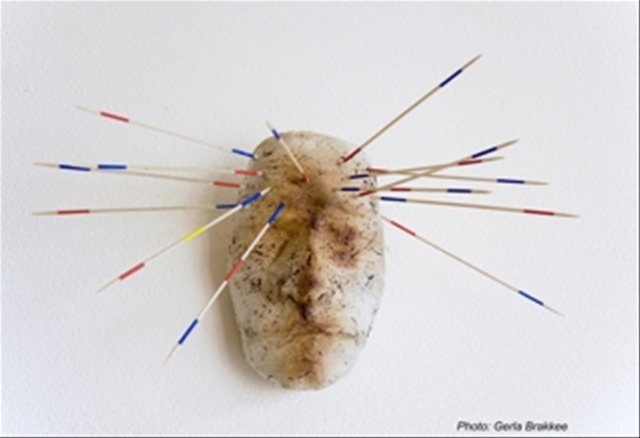 Hawaii and Guantanamo would seem to be polar opposites--one is a dream destination with pristine beaches and sunshine offering endless leisure opportunities, while the other is despised worldwide as the site of indefinite detention, sensory deprivation and illegal torture.
There is one area of overlap, however--both places are battlefields for psychologists' professional turf wars. In Hawaii, psychologists have struggled for several years to pass a bill giving them prescriptive authority--the right to prescribe psychotropic drugs. This year, with the aid of high-powered lobbying, a bill passed the state legislature for the first time and awaits the governor's signature or veto. In Guantanamo, it appears that psychologists may be assisting in the administration of mind-control medications and aiding the torture conducted by the US Government on detainees held there indefinitely.
The connection is scary. Psychologists are attempting to advance their profession as a scientific discipline in both places. Over a six-year period in the 1990s the military granted what psychologists and the American Psychological Association had long hoped for--the same prescriptive authority as psychiatrists. Perhaps in return, and casting the entire profession in an ethical cloud, psychologists have assisted the military with their interrogation program at Guantanamo and perhaps elsewhere.
Both the American Medical Association and the American Psychiatric Association have prohibited their members from participating in military interrogations. The APA has not. This should concern those who favor the Hawaii bill and are willing to overlook the lengths that the APA and many in the profession will go to in order to advance into fields that properly belong to medical science.
From last Friday's Democracy Now broadcast:
In 2005, the American Psychological Association convened a Presidential Task Force on Psychological Ethics and National Security that concluded psychologists' participation in military interrogations was "consistent with the APA Code of Ethics."
A February 2007 article in In These Times, Interrogations Behind Barbed Wire: Who’s to blame for America’s new torture techniques? describes the reaction of the APA to criticism:
The APA passed a resolution condemning torture last August, but pointed to the U.S. government’s reservations about the U.N. Convention Against Torture in their resolution. Those reservations claim that, “in order to constitute torture, an act must be specifically intended to inflict severe physical or mental pain or suffering.”
The article mentions also:
A leaked interrogation log, reported by Time magazine two years ago, reveals that a psychologist was present during an interrogation where the prisoner was made to perform dog tricks and given intravenous fluids to force him to urinate on himself.
More from the Democracy Now program:
Last year the Pentagon reportedly moved to only using psychologists, and not psychiatrists, to help in interrogations. Why? Because the American Psychiatric Association had adopted a new policy discouraging its members from participating in military interrogations. As did the American Medical Association. But their counterpart, the American Psychological Association, did not.
Who is administering drugs in Guantanamo? Why are the licenses of psychologists participating in torture and involuntary drugging not being pulled? Several Guantanamo detainees have described being drugged or finding drugs in their food. The reports are considered credible.
What's incredible is that if Hawaii allows psychologists to prescribe medications (only two states at present allow this), we will be complicit in enhancing the case that psychologists are prepared with training and ethical strength, to handle prescriptive authority. It's clear, from their role in Guantanamo and the stance of their professional organization, that this would be a mistake.
The suffering of Guantanamo prisoners may seem remote to Hawaii residents, but the effects of giving prescriptive authority to psychologists will be first felt right here, and we should work to prevent this from happening. The APA ethical standards would govern how Hawaii psychologists behave, and these standards appear to favor professional advancement over patient concerns.
After many unsuccessful years trying to push a bill through the Legislature, psychologists hired Alex Santiago as their lobbyist. Santiago served as the chairman of the Hawaii Democratic Party From April 2003 to June 2004. Clearly, he still wields some power with long-term legislators. As reported here in Disappeared News in April, HB 1456, the House version of the psychologist bill, was heard by the Senate CPH committee and failed on a vote, as in the past. A tipster reported that Santiago begged Senators to schedule the bill for another vote, and they complied, blindsiding the public by scheduling the vote with less than the required 48-hour notice, and perhaps even less than 24-hours notice. And this time it passed. A bill that died was thus resurrected. It should not have happened. Santiago seems to have earned his pay.
One person who testified at legislative committee hearings claimed that there were no complications after 10,000 prescriptions written by psychologists in the military program (paraphrase). I found that claim to be incredible. In that many prescriptions, regardless of who writes them, it would seem that some are likely to run into trouble. Drug therapy simply isn't that safe. I don't have data to back this up, but it was up to legislators to ask for the evidence and to challenge claims that were made for the military program and its relationship to the very different proposal for Hawaii.
Hawaii has a shortage of psychiatrists on Neighbor Islands. The problem is likely not going to be solved unless the issue of reimbursements for all physicians in rural areas is solved. We should not look upon psychologist's drive for prescriptive authority as a band-aid to cover up our health care problems in rural areas. Every citizen of the state deserves equal access to quality medical care, and the band-aid simply allows the wound to fester underneath. It also could put our elderly at risk.
The governor should veto this bill. It would condemn some Hawaii patients to second-class status, deserving only a lower level of medical care. Since psychologists would be allowed to prescribe from a very limited formulary, it would deprive those who need different drugs of the opportunity to be treated properly. It splits citizens according to ability to pay--those who live in Hawaii Kai, for example, won't be affected--they'll continue to have their medications prescribed by physicians.
Let's face it--"when your only tool is a hammer," that is, when you are only allowed to prescribe certain drugs, we can be sure that those drugs will be applied instead of the more expensive, newer, or more appropriate drugs that are not in the formulary. That is why mental health advocates and others oppose the use of restrictive formularies in any setting. Most states now have laws requiring managed care organizations to disclose if they impose a restrictive formulary and to describe the procedure necessary to obtain non-formulary drugs. Hawaii, on the other hand, if this bill becomes law, would be imposing restrictions on the treatment of its poorest residents, and there would be no alternative procedures for them to get the prescriptions they might need.
Worse, since geriatric patients often have multiple drug needs and complicated interactions to their medications, this bill would, simply put, place them at risk of life-threatening complications. Would you want your elderly parents or grandparents to be seen by someone with limited training, no geriatric training at all, and without access to proper medicines? I don't think so.
Sometimes patients show up in emergency rooms, for example, presenting symptoms that might be mistaken for psychiatric illnesses, such as disorientation. It takes the skill of a doctor to recognize that the problem might be a physical, not mental, situation, such as a diabetic reaction, and to apply the appropriate care to save the patient's life. In the elderly also, physical problems may be dismissed as mental, with disastrous results. Doctors understand this. The limited training proposed in the bill now before the governor does not prepare psychologists to care for the elderly or to recognize physical ailments.
On the other hand, multi-disciplinary teams with psychologists, physicians, social workers and others are highly effective and widely used. Prescriptions are written by the doctors in consultation with the mental health professionals.
While the APA remains ethically challenged, Hawaii should not put patients at risk in order to advance professional aspirations of psychologists. Should the governor sign the bill, the APA will use our example to push for prescriptive authority in other states. Our citizens should not be made into pawns in this struggle.
Call the governor at 808-586-0034 or fax her at 808-586-0006 and ask her to veto SB1004, the bill granting psychologists prescriptive authority.
Tuesday, June 05, 2007
Oprah + Michael Moore = Universal Health Care in the USA??
But would the film be enough to move our politicians towards adopting a system of universal health care similar to what other countries have? It's influence was given a big boost tonight as Oprah interviewed Moore and showed clips from the film. Her audience was treated to a showing of the film before the broadcast and they were enthusiastic, interrupting the interview with applause.
Oprah also said that she would be holding a town hall discussion about it on her webswite. If Oprah hangs on to this issue it has a chance of making a bigger impact than Moore alone could muster.
If you missed her program this evening, it's been posted on YouTube. Click below for part one and part two, unless someone makes them take the videos off.
Help spread the word. Email the YouTube links to your friend, or direct them to this web page to see them.
Part 1: http://youtube.com/watch?v=-U_RIK7OyuY
Part 2: http://youtube.com/watch?v=Icor2ILQtLw
Friday, June 01, 2007
Let's tell Sen. Inouye and Sen. Akaka to quit funding the Iraq war
You can call, fax, or even ask for an appointment with either senator to tell them to quit paying for this war. Sen. Inouye is in town, I shook his hand on Wednesday. So you can try to get a senator's ear in person if you like. Just ask. Who knows, they might say yes.
Sen. Daniel Inouye: Honolulu phone: 541-2542 fax: 541-2549 Federal Bldg. Rm. 7-212
Sen. Daniel Akaka: Honolulu phone: 522-8970 fax: 545-4683 Federal Bldg. Rm. 3-106.
Why is your phone call/fax/visit important? Because Congress, with the connivance of the commercial press, is misleading us into believing that they have to pay for the war because they can't overcome the president's veto.
That's bullshit.
The Constitution is clear: it requires Congress to approve all spending. So Bush needs Congress's approval to continue the Iraq war. Congress does not need Bush's approval to end the war. I was reminded of that in the latest Media Advisory at fair.org, which elaborated:
Actually, the Constitution gives Congress the power "to raise and support armies, but no appropriation of money to that use shall be for a longer term than two years."As to ending the war, the president is not the decider, Congress is.
FAIR (Fairness and Accuracy in Reporting) also included this opinion by none other than conservative columnist George Will:
"MoveOn.org happens to be right.... They're correct as a matter of constitutional fact, which is that the Democrats could stop the war if they chose. They choose not to."It may be up to us to change Congress' mind. Rep. Abercrombie and Hirono voted correctly, now let's make sure our two senators do what they should to end this unwanted war.
'You are making some people nervous' is now grounds for police action
From an article in Georgetown University's newspaper:
DPS Removes Student from Graduation CeremonyRead the rest of the article here for details of Mr. Fattahi's humiliation in the hallway after he was pulled out of the ceremony.
By Michele Hong
Hoya Staff Writer
Wednesday, May 30, 2007
Kambiz Fattahi (GRD ’08) was sitting in the first row of the commencement audience on the afternoon of May 18 holding a box of cookies for his graduating friend.
But he never got to see her walk across the stage. And he never got to hand her the cookies.
According to Fattahi, about five minutes after historian Bernard Bailyn, the keynote speaker at the Graduate School of Arts and Sciences’ commencement in McDonough Gymnasium, concluded his speech lauding the American traditions of freedom and justice, two Department of Public Safety officers removed Fattahi from the ceremony. Fattahi, who was born in Iran, said that when he asked for a reason, the officers told him that his Middle Eastern appearance was making others at the ceremony uncomfortable and that they had received complaints about his presence.
“They said, ‘You are making some people nervous. We received some complaints,’” he said. “Truthfully, I just didn’t expect it.”
(Thanks: Progressive Review Undernews)


